“Never doubt that a small group of thoughtful, committed, citizens can change the world. Indeed, it's the only thing that ever has.” - Margaret Mead
Wide-ranging in scope, our programmes cover diverse themes in international development, all playing a part in contributing towards the UN Sustainable Development Goals and the ‘leave no one behind’ agenda.
Complimenting this, our programme design aims to connect locally-led initiatives with national development drives, conducting new research and producing vital publications to inform policy and lead the debate across government, research groups, educational institutions, NGOs and civil society at local, national and international levels.... Read More
Pragya’s Programme areas, and the projects that fall within them, have been conceived, refined and expanded over many years, and represent an approach to development that is at once modern and innovative, pragmatic and direct, yet sensitively embedded within cultural histories and delicate natural environments. Pragya’s global programmes work is guided by our... Read More

Pragya conducts wide-ranging research in all the countries in which we work. We undertake ethnographic research concerning last mile and marginalised populations, and the unique and often little-understood geographies and climates of remote regions of the world, using our findings and analysis to inform the policy debate in national governments and international institutions. Our research also investigates how technologies might best be applied to improve the wellbeing of communities in isolated regions lacking consistent power and subject to erratic and harsh climatic conditions.
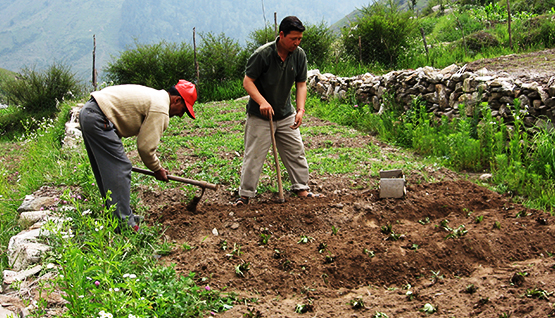
Bridging technology gaps for remote and marginalized communities...
Pragya has an integrated research and extension programme for developing and implementing improved technologies in an effort to address area specific problems and conditions, and primarily aimed at ensuring improved quality of life, livelihood security and natural resource sustainability. Pilot and demonstration projects are being carried out and training programmes conducted for potential users in India, Nepal and East Africa.
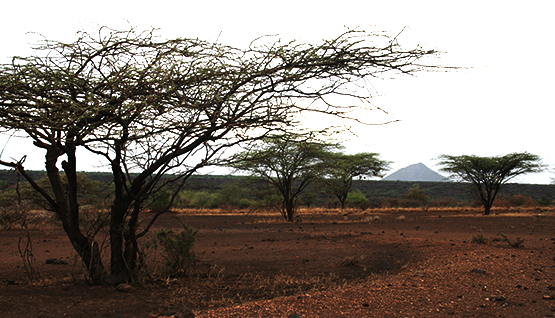
Collecting and managing a compendium of information on communities and geographies that continue to exist in relative obscurity...
Remote and unserved regions of the world are uncharted territory except for the intrepid traveller, and their people continue to exist in relative obscurity. In the absence of adequate information and research, policies usually fail to respect their geographical identity and address their unique problems. Pragya initiatives seek to document and thereby, preserve and revitalize the rich natural and cultural heritage of less-known peoples and regions.
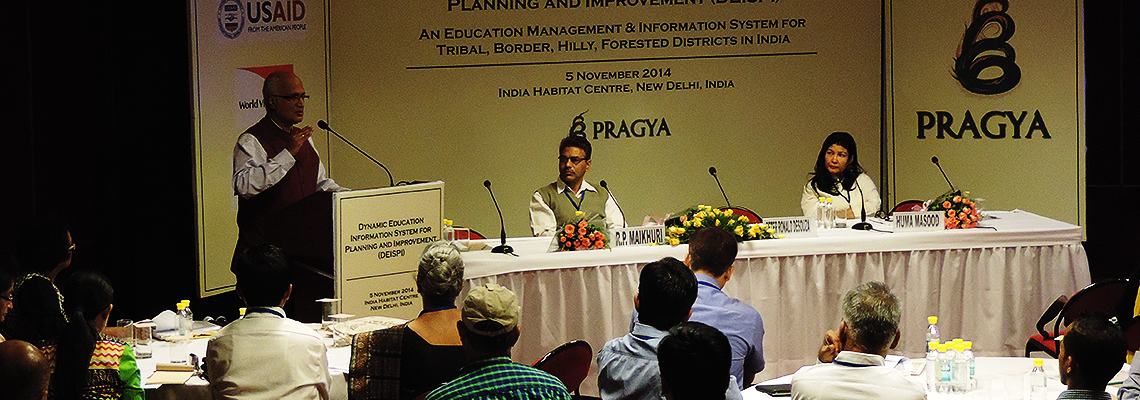
Enhancing understanding of remote areas and last-mile communities among key influencers and the wider public...
An ongoing initiative of Pragya to enhance the understanding of remote areas and peoples among key influencers and the wider public, and address the current neglect in terms of development attention and policy focus. We undertake appropriate research to create a compendium of information on these remote and underserved regions, to enhance understanding among policy-makers and awareness in development workers, and thus catalyse area-specific policies & interventions. Our studies seek to examine critical issues and potential solutions, and help extend the frontiers of knowledge on the region with findings being used for policy determination and formulation.
The sensitive ecosystems of the Himalayas are highly susceptible to climate change and are under increasing pressure from inappropriate and escalating human development, with the region having already lost over 70% of its original habitat. Warming in the region is estimated at 3-5 times the global average, presenting a particular threat to alpine and sub-alpine flora.
Between 2003-2006, Pragya conducted extensive research across six states sampling the entire breadth of the high-altitude Himalayan belt of northern India, mapping the diversity and distribution of medicinal and aromatic plants, many of which are endemic to the region. The research inventoried the region’s herbal wealth, establishing the level of threat facing various species and identifying priority areas for conservation action. Findings were indexed in a scientific database for analysis and further action, and following a series of multi-stakeholder consultations at local and national levels focussed on conservation strategies for medicinal plants, our research helped shape programming at the National Medicinal Plants Board of the Government of India.
With climate change disproportionately impacting the Himalayan region of northern India, natural disasters are increasing in frequency and severity, and we are seeing the emergence of disasters from newer phenomenon such as cloud bursts and Glacial Lake Outburst Floods. These disasters bring catastrophic loss of life and destruction of property and livelihoods to Himalayan populations. Aggravating the situation, poorly-planned or inappropriate human development is compromising Himalayan ecosystems that play a vital role in the region’s hydrogeological stability, contributing to the rise in disaster events. Pragya conducted wide-ranging qualitative and quantitative research and data analysis concerning the key hazards and early warning indicators across various Himalayan locations, involving consultations at the grassroots to gain insights from those directly affected and at risk, with further consultations with sector specialists and professionals including Himalaya experts, research institutions, NGOs, district authorities, national DRR authorities and international stakeholders. This research provided the bedrock for the development of a multi-stakeholder citizen-based Disaster Management System for the Himalaya.
In 2006-07, Pragya undertook a study of the extent and nature of environmental and anthropogenic threats in Himalayan cold deserts. Using the status of 82 watersheds across two Himalayan states as indicators, the research sought to understand the level of threat to these regions in conjunction with their adaptive capacity, producing an overall vulnerability analysis. The findings of the study highlighted the correlation between human development and climate change impacts, including the depletion of natural resources upon which cold desert communities, and the highly integrated ecosystems of the Himalayas, depend for their continued integrity and security. The research, which identified key locales for ecological and socioeconomic support, received international recognition: Highly Commended Paper, Emerald Literati Network Awards for Excellence, 2011.
In 1998-2000, Pragya had conducted a study on an Appropriate Development Model for Cold Deserts, based on environmental conditions in cold deserts and development and infrastructure gaps, research which helped revise the Government of India’s Desert Development Programme to encompass cold deserts.
As part of our wider Climate Smart Agriculture work, Pragya is supporting experienced farmers to undertake crop research in the middle to high altitude band of the Himalayan region of northern India, to identify crop species and cultivation protocols under which different crops thrive with differing altitudes, temperatures and soil types. This is now being expanded to foothills, and in plains. In addition to research concerning improved yield and quality of established crops, Pragya is supporting the testing of more exotic, non-traditional crops to widen the produce base that farmers can put to market, with research spanning different sowing methods, timing of cultivation, pest and disease management measures and so on. Findings of this research have been collated into a digital crop advisory database for the Himalayan region which won the ‘ICT for Mountain Development Award 2016’.
Pragya undertook a research on the potential effectiveness of peer support models (and similar decentralised or community-led approaches) as a strategy for addressing reproductive and nutritional health issues affecting rural communities in northern Kenya, with particular focus on women, children and infants. The core of the investigation’s activities comprised a detailed consultation of575women, girls and men living in 15 rural communities located in 3 counties in northern Kenya (Turkana, Samburu and Laikipia). Pragya Kenya staff and volunteers delivered 45 workshops, with separate sessions delivered for - women aged 15-44; girls aged 10-15; men and boys of all ages.
The design of the investigation placed a strong emphasis on community stakeholder consultation in order to ensure that findings were an accurate and appropriate representation of beneficiaries’ perceived needs and priorities; to incorporate their perspectives within activity planning; to enable space for local innovation; and to engage communities in the design of intervention through Participatory Impact Pathways Analysis (PIPA) tools. Building primarily on the results of the literature review component of the investigation, a best practices guide for peer support (and related) approaches to healthcare in northern Kenya was developed. Results from the community consultation were used to conduct an options appraisal exercise, which evaluated 3 alternative models for delivering peer support-based healthcare in terms of anticipated impact, access, cost, sustainability. Building on all the above outputs, an Action Plan was developed which provided a broad outline for peer support-based interventions on maternal and child health in northern Kenya.
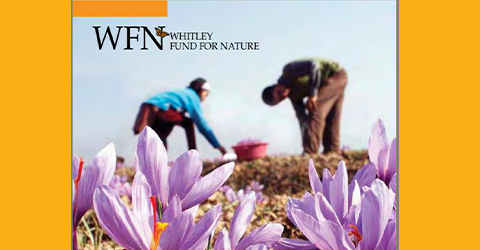
The aim of the report is to research and consider prospects for selling sustainably sourced medicinal and aromatic plants (MAPs) from rural Himalayan communities into international markets. The Whitley Fund for Nature commissioned this report as part of a five year project called “Water Access & Wasteland Development for Marginalised Groups in Himalayan Cold Deserts”...
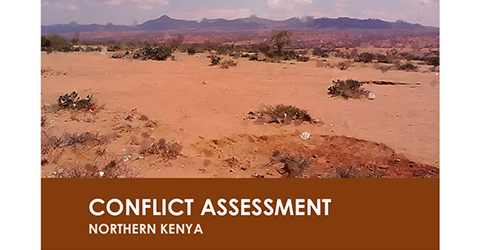
The arid/semi-arid northern districts (Turkana, Baringo, Marsabit, Samburu, Laikipia) are part of a conflict-affected region, ravaged by internal and cross-border conflict with raiders from Uganda, Sudan, Somalia, Ethiopia.
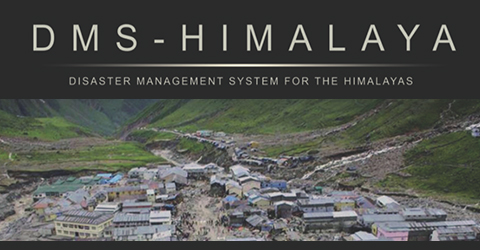
In June 2013, high-intensity rain and cloudbursts in the Indian State of Uttarakhand in the Himalayas triggered a series of hydrologic and geologic disasters affecting more than 2,036,000 people and leading to one of the worst catastrophes of the decade. Banerji, Ipe and Basu through first-hand observations, vividly recapture the cascading combination disaster that occurred and the event trajectory...
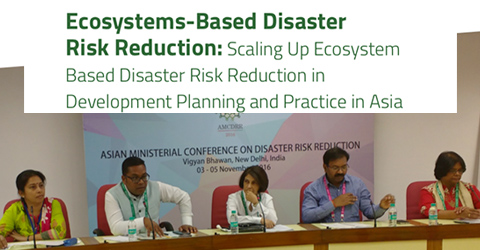
The Thematic Session, ‘Ecosystems based Disaster Risk Reduction (Eco-DRR): Scaling up Ecosystem based Disaster risk reduction in Development Plan- ning and Practice in Asia’ was part of the 7th Asian Ministerial Conference for Disaster Risk Reduction (AMCDRR). Pragya co-hosted the session with United Nations Environment Program (UNEP)and Ecosystem Services for Poverty Allevi- ation (ESPA).
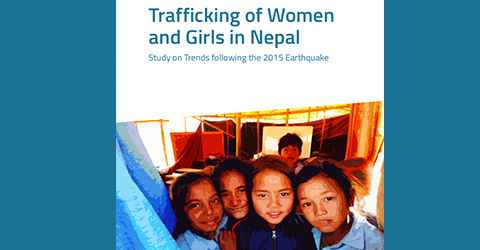
Pragya carried out an in-depth thematic study on the issue of trafficking to better understand its different aspects, examine the prevalence and factors, and highlight gaps where intensive research or interventions might be undertaken, particularly to combat it in the aftermath of the 2015 earthquake in Nepal.
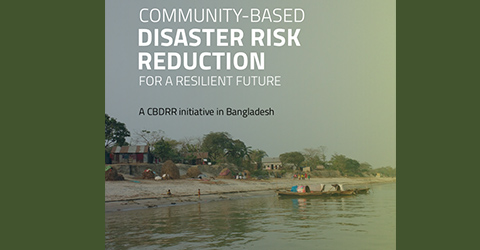
Bangladesh is among the top 15 countries in the world with highest exposure to disaster. Pragya's program aims at enhancing disaster resilience among the vulnerable Char communities with risk reduction measures for natural disasters along with effective disaster response and a focus on empowerment of women and girls and protection from trafficking and other forms of violence.
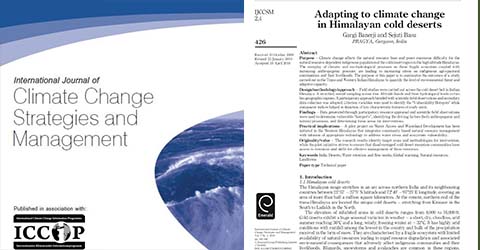
Climate change affects the natural resource base and poses enormous difficulty for the natural resource-dependent indigenous population of the cold desert region in the high altitude Himalayas. The purpose of this paper is to summarize the outcomes of a study carried out in the Trans and Western Indian Himalayas to quantify the level of environmental threat and adaptive capacity.
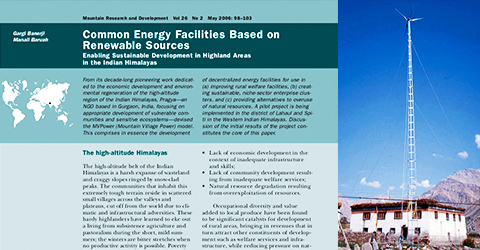
From its decade-long pioneering work dedicat- ed to the economic development and environ- mental regeneration of the high-altitude region of the Indian Himalayas, Pragya—an NGO based in Gurgaon, India, focusing on appropriate development of vulnerable com- munities and sensitive ecosystems—devised the MVPower (Mountain Village Power) model.
The prohibitionist criminal justice approach that has dominated drug policy, continues to destroy livelihoods and claim lives. The report captures experiences of some of the most marginalised communities affected by the so-called ‘war on drugs’. The report by Health Poverty Action is informed by research in India by Pragya and in Brazil by Instituto Brasileiro de Ciências Criminais.
Women in the Himalayas suffer a low social and economic status and a very high load of physical work requirement of households. This paper presents the findings of a participative study in the Indian Himalayas on the nutrition status of households, with a special focus on women. The study reveals chronic calorie deficit and nutritionally poor diet, suffered by...
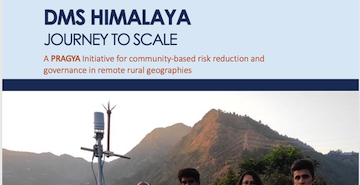
Communities in the Himalayan mountains are threatened by multiple hazards and have been experiencing growing frequency and intensity of disasters over the years. These communities are typically remote and poor, have little disaster resilience and rely entirely on disaster management support from the government.