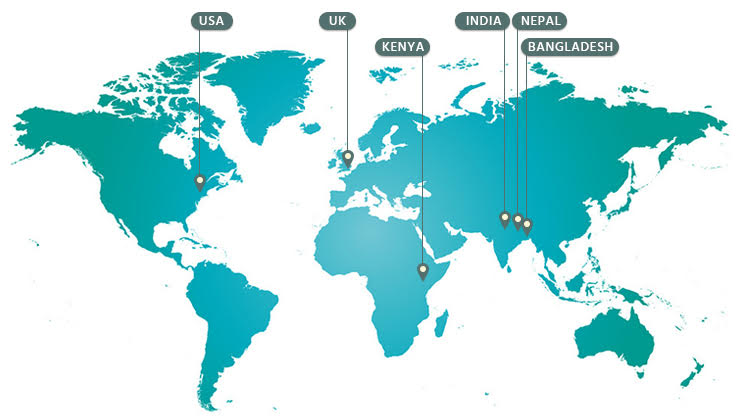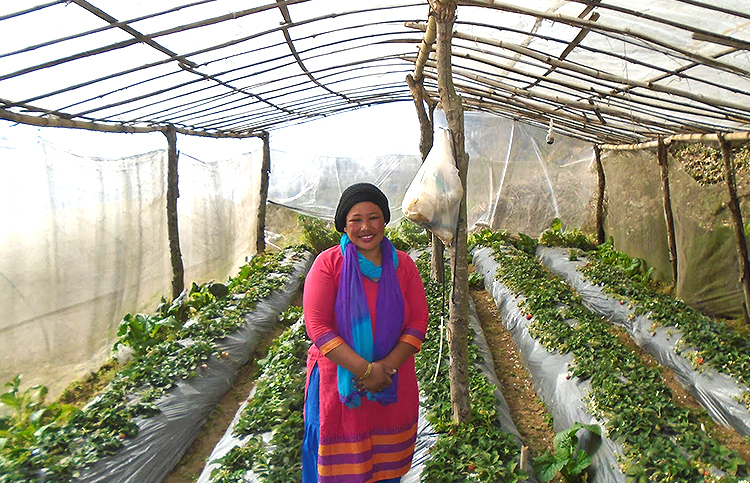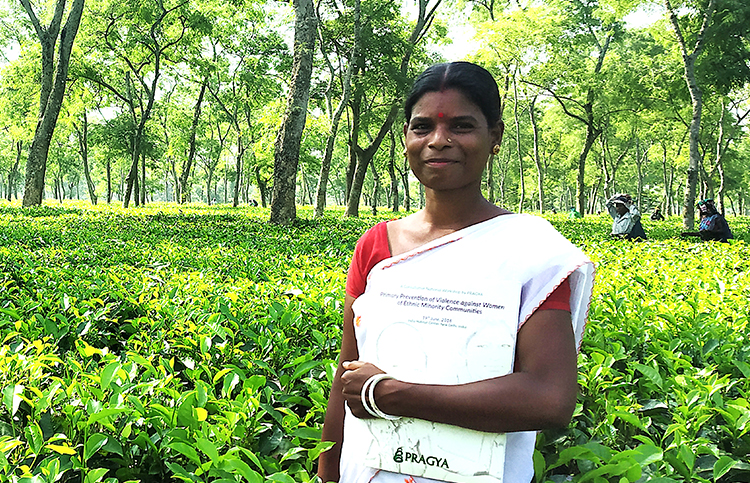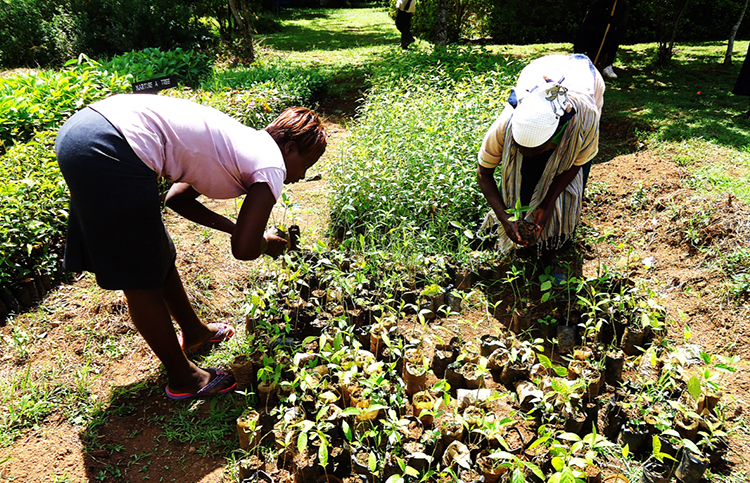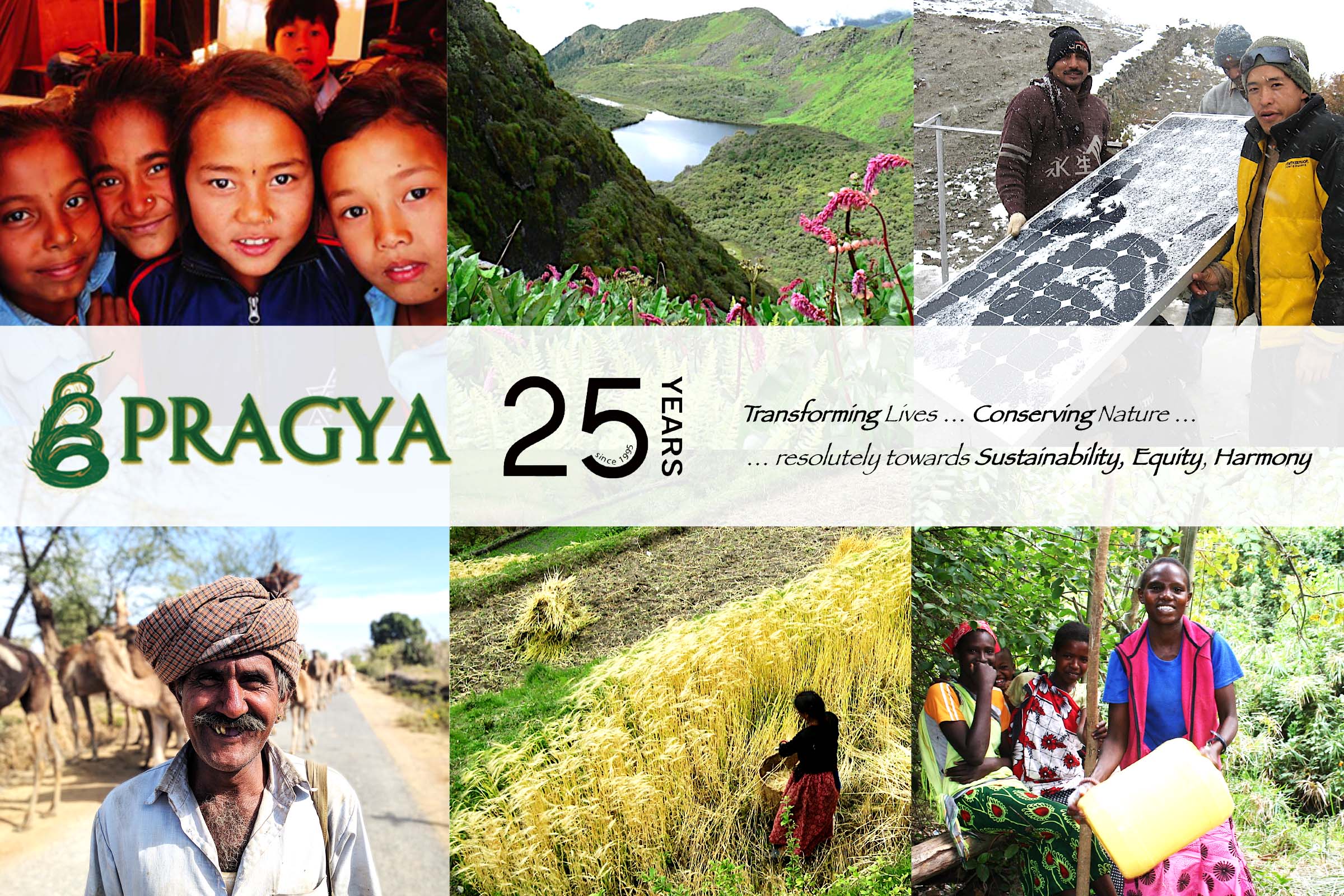
Pragya is working with indigenous Himalayan communities across the high altitude belt in India and Nepal, covering the cold deserts of the Western Himalayas in India, the high altitude valleys of the Central and Eastern Himalayas in India, and the high mountain eco-zone in Nepal. Grassroots projects blend economic development of indigenous communities with biodiversity and cultural heritage conservation.
Mountains regions – the neglect and the needs
Mountains constitute one-fifth of the land on our planet. About ten percent of the world’s people and a wide variety of flora and fauna live on their slopes. Their altitude changes create different agro-climatic conditions and diverse ecosystems; their seclusion and remoteness have made them the last bastions of globally significant biodiversity and cultural heterogeneity. Mountains are also the storehouses of the world for many life-giving resources- freshwater, fuelwood and timber, minerals, hydroelectric power, fodder, resins, plant fibres, medicines. They are the source of much of the water on the earth’s surface and the freshwater supplies for at least half of humanity. About a third of the world's protected areas for biodiversity conservation are in mountain regions. They harbor valuable medicinal and food plants and rare and beautiful animal species, and are important biological corridors and sanctuaries for plants and animals long eliminated from the more transformed lowlands.
Every mountain slope is, from the anthropo-geographical standpoint, a complex phenomenon. It displays a whole range of cultural features/combinations- a variety of occupations from commercial cropping and agro-processing to nomadic pastoralists, every degree of density from congestion to vacancy, every range of cultural development from industrialisation to nomadism. The isolation bred by the high mountain ranges has helped nurture a multiplicity of tribes with unique cultures that include languages, social structures, and spiritual traditions. Each tribe also has its own arts & crafts (weaving, metal craft, architecture, music & dance) and certain invaluable traditional knowledge systems (ethnobotany, medicine). This knowledge is most often far more holistic in nature than modern systems, and may have the solutions to many of our modern-day problems.
Mountain ecosystems are today in grave danger from the increasing pressures on them and overexploitation of their resources. Their fragility and complexity make mountain environments especially sensitive to unsustainable resource use, unplanned development, and global climatic change. Environmental pressures are leading to deforestation and desilting, extinction of endemic species, and increasing ecological threats. The unique cultures of the mountain lands are today threatened by the winds of change and the negative impacts of modernisation. And the indigenous mountain communities, that are stewards of invaluable and irreplaceable treasures of cultural and biological diversity, remain among the poorest in the world, the valleys they inhabit the least developed in terms of basic infrastructure and facilities. Livelihood options are also limited given the constraints of the environment, the demographics, and technology.
Although
the storehouses of much of the world’s diversity – both biological and cultural, and many life-giving resources (freshwater, fuelwood, timber, minerals, hydropower, fodder, resins, plant fibres, medicines) - mountain regions of the world, such as the Himalayas, are grossly undervalued and deprived, and increasingly under ecological threat. Altitude variations have created in them a range of agro-climatic conditions and diverse ecosystems, and their seclusion & remoteness have left them as some of the last bastions of globally significant diversity. Their slopes and valleys are inhabited by many of the world’s indigenous peoples and a wide variety of flora & fauna. Escalating anthropogenic and environmental pressures are however causing grave damage to these sensitive & fragile mountain worlds. Deforestation is laying vast stretches barren, several rare & endemic species are threatened with extinction, and droughts & floods are recurrent threats. Mountain regions have also, historically, been deprived of development attention, and mountain communities remain among the poorest in the world, the valleys they inhabit the least developed in terms of basic infrastructure & facilities. At the same time, the unique cultures of mountain lands, the source of support for these communities, are threatened by the impacts of modernisation.
The Development Gap and Ecological Crisis in the High Altitude Belt of the Himalayan Region
one of the 34 Global Biodiversity Hotspots
3 to 5 times faster global warming than in other areas
The mountain range of the Himalayas has been recognized by Conservation International as one of the 34 Global Biodiversity Hotspots that are a priority for conservation action, having lost more than 70% of its original habitat. A bio-geographically unique zone, it has the maximum degree of endemism in the Asian region. Unfortunately, many of the species of plants, birds and mammals are critically endangered today, threatened by both anthropogenic impacts and climate change. There have been extensive changes in land use and large areas of remaining habitat in the hotspot are highly degraded due to overgrazing and excessive timber & NTFP extraction, poaching (including that of endangered species like snow leopards & red pandas), and construction of roads & dams. The Intergovernmental Panel on Climate Change has indicated that the pattern of global warming will be more pronounced at high altitude zones, especially those in the tropics and sub-tropics - upto3 to 5 times faster global warming than in other areas. This is resulting in rapidly thinning ice packs and receding glaciers in the Himalayas, escalating desertification and increased water stress with impacts on livelihoods, as well as increase in size of seasonal high altitude lakes with the potential of disastrous floods when their natural barriers burst.
M ore than 80% of the population is tribal and among the most deprived in the world.
The population suffers from high levels of illiteracy, malnourishment and underemployment, while living in primitive conditions and considerable physical hardship.
The high altitude Himalayas comprise small valleys with a scatter of villages and a dispersed population amidst high mountain ranges, insulated and dependent on local level resources. More than 80% of the population is tribal and among the most deprived in the world. These communities constitute a ‘shadow population’ that suffers from extreme neglect by all agents of development and abysmally poor access to basic services of education, health, communication. Livelihood options are also limited, given the constraints of the environment and technology, which have kept them locked in their condition of poverty & deprivation. Therefore, in spite of global developments indigenous communities of the region continue to be illiterate, malnourished and underemployed, and live in primitive conditions and considerable physical hardship. The remoteness and poor connectivity of the region and the sparsity of population have marginalised these communities in the democratic process as well.
The central Himalayan region comprises the Garhwal & Kumaon Himalayas in the state of Uttarakhand in India. Pragya projects are being implemented in the high altitude belt spread across the 3 districts of Chamoli, Uttarkashi and Pithoragarh.
The central Himalayan region in Indiai represents a number of interlinked, inner valleys set in a series of large parallel ranges with an average height of over 4,000 metres, with some over 6,000 metre peaks. Rich in high altitude alpine meadows like the Valley of Flowers, and conifer forests with deodar, pine, spruce & fir, it is also the head of the rivers Ganga and Yamunathat water the populous Indian plains. People inhabiting the region are dependent on terraced agriculture and animal rearing for a living. They also depend on wild resources to a great extent for their food security, and for supplementing family incomes. Many tourism and pilgrimage destinations also lie in these valleys, which see a massive influx of tourists each summer.
The eastern Indian Himalayas span the 8 states in north-east India and parts of the state of W. Bengal. Pragya addresses the high altitude districts of North and West Sikkim in the state of Sikkim, Darjeeling in the state of West Bengal and West Kameng and Tawang in the state of Arunachal Pradesh in the region.
The eastern Himalayan region of India is one of spectacular landscapes and a multitude of ethnic minorities, tribes and clans. This is among the most biodiverse parts of the country and is also culturally rich & varied. The economy is agrarian and at a subsistence level, and the population is given to ecologically degrading practices such as ‘slash & burn’ cultivation and wildlife hunting for food. It is characterized by extreme poverty and severe infrastructural inadequacies. Frequent instability due to socio-political stresses also dogs the region.
Depleting natural resources and pressure on the environment
The natural resources that the communities depend on for their consumption and livelihood needs are being fast depleted with rapidly increasing population pressure. More and more of the steep, forested slopes are being converted to agricultural land, severely affecting the ecosystem balance. The high altitude pasturelands are also getting degraded due to overgrazing and irresponsible collection of minor forest products. A wide variety of wild plant species of economic value that grow in the area, including species used for medicines (Picrorhiza kurroa, Nardostachys jatamansi), and those used for dyes and tans (Datisca, Rubia cordifolia) and fibre (Betula utilis, Cannabis sativa), are threatened by uncontrolled grazing and excessive collection. Exogenous factors like climate change, commercial harvesting and tourist influx are also impacting the biodiversity of the area in an adverse manner.
A significant part of the forests has been severely degraded. The region has a very challenging climate, which leads to frequent landslides and rock-falls, and the impacts of global warming have made it more erratic and unpredictable. Floods and droughts are becoming more frequent, and desertification is increasing. The region’s appeal to a diverse category of visitors has in recent years resulted in a host of problems, since the visitation has far exceeded its carrying capacity. It has led to problems of sanitation, pollution of water sources and waste accumulation, and puts a severe strain on the already poor infrastructure. Environmental sanitation measures are negligible which is also leading to health issues among the region’s inhabitants as well as visitors.
Low human resource capacity and inadequate services
These inner valleys of the eastern and central Himalayas are under-served by the welfare services considered commonplace in plains regions. Many remote villages are unconnected by roads and lack schools and health centres, and power and communication services. Potable water and sanitation facilities are absent, and this causes epidemics, particularly in the rainy season, when sources of drinking water become contaminated. Average life expectancy is much lower and malnutrition much higher than in other parts of the country. These factors leave the population without the skills and capacity to participate with equity in national economic processes.
The cold desert region spans the districts of Leh, Kargil, Lahaul & Spiti, Chamba and Kinnaur, across the 2 states of Jammu & Kashmir and Himachal Pradesh. Pragya projects are being implemented in all these districts.
The cold deserts of the western Indian Himalayas constitute a unique ecosystem. Altitudes of inhabited areas can be as high as 16,000 ft. Precipitation is mainly in the form of snow. Temperatures range from -40oC in winters to 30oC in summers and wind velocities are very high. Vegetation is limited to shrubs & grasses and the ecosystem is extremely fragile. People inhabiting the region are totally dependent on the scanty natural resources for their livelihoods and the economy is based on subsistence agriculture and pastoralism. Landholdings are small, and soil quality is poor and water resources inadequate, rendering very low crop productivity.
Nature under pressure
Cold deserts face serious disadvantages to their development associated with an interplay of factors such as limited natural resources, remoteness and fragile ecosystems. Extreme atmospheric dryness, inadequacy of freshwater resources, and inadequate irrigation potential, lead to problems of low soil productivity, inadequate sanitation, etc. Secluded in their high habitats, the indigenous population had managed to eke out their needs and adapt to the harshness of their chosen habitat with traditional NRM techniques. The unpleasant face of development and the increasing biotic pressure in recent years along with the lack of appropriate technologies have led to the overuse and degradation of the natural resources of the region. The scarce forest cover is steadily getting degraded, and the limited water resources are getting depleted and polluted. These great, arid heights are home to some rare and species of flora and fauna, which are however threatened by habitat degradation and destructive practices of humans, as well as the insidious effects of climate change. Many of the medicinal and aromatic plants of the cold deserts (Ephedragerardiana, Podophyllum hexandrum, Artemisia brevifolia, Saussurea costus) have suffered depletion rates of up to 80% of their populations in the last six to ten years due to overharvesting for use and trade. Some of the plants are endemic to the region and extinction from the region would imply a serious loss of global biodiversity. The elusive snow leopard, the Tibetan wild ass and Tibetan antelope are among the animals that inhabit the cold deserts, and their numbers are under pressure as their habitats are getting fragmented and degraded. A new crisis threatening the region is the increasing frequency and scale of environmental disasters with their immense damage to life and property and grievous impacts on the vulnerable groups, particularly small & marginal farmers, women and children.
Culture under siege
The unique cultures of the so long secluded cold desert lands are threatened today by the onslaught of homogenising modernisation, unplanned development, and irresponsible tourism. Much of the rich heritage of arts and crafts are being eroded. What is also being lost are the ethnic practices for the management of the environment and traditional knowledge of medicine that have evolved over centuries in these indigenous communities. Very few members of the community today know the traditional songs, the customary sports, local musical instruments, etc. There are very few weavers of the beautifully embroidered ‘lingche’, and very few players of the ancient guitar, the ‘kokpo’. The poverty of the locals has also forced many to start selling ancient treasures to tourists and traders.
Inadequate infrastructure and services
The cold deserts have a very difficult terrain and climate that hinders the development of infrastructure and obstructs the reach and smooth delivery of welfare services of education, healthcare, etc. Further, their distinctive geographic conditions make most technologies ineffective in these regions. As a result, schools and health centres are not available to all, and electricity and water, communication and sanitation, are highly inadequate. Especially neglected are the nomadic pastoral tribes that graze on the high altitude rangelands in the region. Very little research interest and technology development have been focused on these regions, however, and the few technologies that have been transferred have frequently not been aligned to the special needs and conditions of the region. The development that has taken place therefore is frequently not aligned to its special needs and conditions.
Nepal is a country burdened with multiple disadvantages - a difficult geography, a decade of violent insurgency, landlocked and hemmed on all sides by powerful neighbours. Due to its difficult geography and tormented history, socioeconomic progress has not been rapid and Nepal remains an LDC with a very low per capita income, and is currently ranked the third lowest country in Asia on the Human Development Index with some of the worst poverty and health statistics regionally and globally. Approximately 40% of Nepalese live below the poverty line and indicators suggest that the number is on the rise in rural areas. A quarter of Nepal’s population is undernourished and half of the under-five age group suffers from malnutrition and stunting, and infant and child mortality rates are also very high. The adult literacy in Nepal is among the lowest in the world.
The mountain eco-zone of Nepal stretches all along its northern border, and constitutes the highest altitude belt [the other two being Terai (foothills) and hills (Terai and mountains)]. It comprises 16 districts, a majority of them among the most deprived and poorest in the country. These outlying and remote areas are totally rural in character, with small villages at an altitude range of 7,000-10,000ft, and characterized by severe winters, an arid climate, and unproductive soil & minimal water resources. Their isolation has trapped them in subsistence economies and very limited welfare services. The region has also been, traditionally and historically, neglected by the forces of development, and continues to remain marginalised in the political processes as well. Despite its low developmental status, development expenditure in this region has been far lower than in the more developed regions of Nepal. The last several years of social and political turmoil in the country has further impoverished these already poor and deprived regions.
Poverty and food insecurity
Poverty level in the mountain region of Nepal is much higher than the national average. With the remote, rural parts in the Mid-Western and Far Western mountains having a poverty rate as high as 72%, the severity of poverty is also the highest in this ecozone. Lack of skills along with the inaccessibility of the region and infrastructural inadequacies makes it difficult for the communities to reach far markets and access higher incomes or to adopt alternate, high-income livelihoods. Majority of the population comprises smallholder households that produce less than their consumption needs. The region suffers from very high food deficits (80% deficit in mountain regions, as against 7% surplus in plains). As a result, food intake of the mountain communities is chronically lower than calorific norm. Per capita food deficit in the region is as much as 47 kgs., and the diet is most often limited to only staples with very little nutritive inputs. This leads to malnutrition, and results in poor physical development, weak immune systems, and high maternal & infant mortality.
Low infrastructure and services
The mountain eco-zone is also highly disadvantaged in terms of basic amenities and infrastructure. Much of the region largely lacks road connectivity, which makes the provision of services difficult, inadequate and inefficient. There are only 345 kms of roads in the mountain region as against more than 5,000 kms in the hill region and nearly 6,000 kms in the Terai region. All villages are not served by schools and health centres; where these exist, they frequently lack staff and supplies. Literacy levels are very low, about 30% lower than that in the Kathmandu valley, and life expectancy in the mountain districts averages 50 years. Civil society in the area is poorly developed and capacity of extension workers is low.
Burden of women, lower castes
The mountain communities, comprising ethnic minorities, remain unaware of their rights, and locked in a feudal society. Women and the lower castes suffer discriminatory social and cultural practices. On the Gender Gap Index, Nepal ranked 115th out of 134 countries. Women work very long hours, do not have property rights, suffer physical violence, and a large number of impoverished women migrate from their villages to cities, where they end up being exploited. Dalits, Adivasis and Janjatis are excluded groups and suffer from much higher levels of poverty and disparity in access to all welfare services and employment opportunities, and also from social discrimination. The education and health status of Nepalese women and those belonging to excluded groups is significantly lower than the national average, since they have inferior access to education, health care and nutrition. While all of the Nepali population needs interventions to help them access their rights, women and excluded groups need to be a priority.
|